viernes, 14 de mayo de 2010

Part III: Final sociological analysis and recommendations


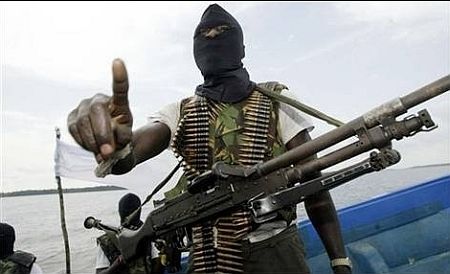
Piracy affects all countries involved in international trade, and therefore all the consumers that purchase products from international trade. On 22 April 2008, France, the United Kingdom, and the United States called for a United Nations resolution to support the nations determined to fight piracy off Somalia (Weir). All nations most gather together to avoid other nations to be in such a distressed situation as to push them to commit a crime. Poverty and a lack of government are clearly two of the most influential factors that fueled the pirates to behave the way they do. Fighting poverty and chaotic governmental institutions benefits everyone and could be a key in ending piracy. Naval vessels from the United States, a number or European states, Russia, India, Canada, Turkey, Malaysia, and South Korea have been rushed to the scene and initiated anti piracy patrols. China has also now reportedly sent a naval detachment to the region. The United Nations Security Council passed resolutions stating all necessary means, including force, to repress piracy (Schofield).

Piracy will not stop waste dumping, the monetarily profits of piracy are not used to feed the poor but rather as an investment to further vandalized the seas of the world. Pirates spend their millions of dollars from ransoms to buy more weapons, more boats, not to feed the poor. It is because this incontinent truth that there are no villains or heroes in the war of piracy. Piracy affects all of us; it affects our environment, our security, and stability that we all should be conserved about as global citizens.

Both piracies as well as illegal waste dumping desperately need a solution. Some argue that the only way to combat piracy is to start the battle on land, in war-torn Somalia ("EU begins anti-piracy mission"). Hope in globalization and the increasing economic interconnection of countries would make interconnectedness another powerful tool in ending piracy. We often seem to forget about problems in the world, especially in Africa because they seem too distant for us to even consider them, when in reality we all live in one world, one planet that has one environment. Whether waste is dumped in Somalia or in Hawaii it is still being improperly disposed. As consumers we contribute to this waste and therefore should at least be informed how it creates a chain of issues. The situation of piracy on Somalia is just another example of the importance of peace, security and stability in our ever growing interconnected global world.


Sources:


Abdullahi, Najad. 'Toxic waste' behind Somali piracy . Al Jazeera, October 11, 2008. Web. 10 May 2010. http://english.aljazeera.net/news/africa/2008/10/2008109174223218644.html

EU begins anti-piracy mission. Al Jazeera, December 08, 2008. Web. 10 May 2010. http://english.aljazeera.net/news/europe/2008/12/200812843349810691.html

Evans, Michael. Royal Navy in firefight with Somali pirates. TimesOnline, November 12, 2008 . Web. 10 May 2010.

Kimuna, Sitawa. "Hazardous Waste Transfer to Africa: implications for the poor and marginalized.." Sustainable Communities 2004. 7.1 (2004): 48.53. Print.

Parrillo, Vincent. Understanding Race and Ethnic Relations . Third. Pearson, 2008. pg. Print. Piracy in waters off the coast of Somalia. International Maritime Organization, 2002. Web. 10 May 2010.

"Pirates 'gained $150m this year' ." BBC, 21 November 2008. Web. 10 May 2010. .

Starr, Barbara. U.S. destroyer pursuing hijacked ship in Somali waters, military says. CNN, 10, 10, 2007. Web. 10 May 2010. .

Schofield, Clive. "The "other" pirates of the horn of Africa." (2009): 1-4. Print.

Somalia country profile . BBC, 28 April 2010. Web. 8 May 2010. .

Somali piracy . BBC, 2 November 2009. Web. 7 May 2010. .

.

"Somali Fishing Industry Has Potential for Growth." Foreign Fishery Developments. (1992): 1-28. Print.

Weir, Gary. "FISH, FAMILY, AND PROFIT." Piracy and the Horn of Africa. (2006): 1-16. Print.

Part II: Major contemporary concerns and sociological analyses


One of the ways to describe the problems in Somalia is that of the so called hate crimes. According to Parrillo hate crimes are defined as any criminal offense against a person or property that is motivated in whole or part by the preferences bias against, race, religion, ethnic national origin, group or sexual orientation. These hate crimes occur at two different levels, hate crimes that the Somalis pirates commit by hijacking people on boats and holding them hostage until a ransom is paid. From 1993 to 2005, 340 crew members and passengers died at the hands of pirates, and 464 received injuries. In 2005 alone piracy resulted in over 150 injuries and assaults and over 650 crew members were taken hostage or kidnapped (Weir). Crew members and outsiders from Somalia have died due to piracy hate crimes, but hate crimes is another way to describe what developed nations are committing in Somalia. It is a criminal offense against property to dump toxic waste without the proper precautions in the area; many Somalis have also died due to the toxic waste dumping. From a sociological perspective frustration, stereotyping, occupation mobility and social stratification are all key terms in describing the issue of piracy in Somalia.


Desperate situations call for desperate measures and some of the pirates are acting upon desperate grounds of poverty, Parrillo points out that frustration is the result of relative deprivation in which expectations remain unsatisfied. Relative deprivation is a lack of resources, or rewards, in ones standard of living in comparison with those of others in the society. Frustration can increase aggression towards others. The majority of the Somalis population lives under poverty as previously described. Pirates feel frustrated by not being able to make money and they turn to crimes as a way to ease their frustration. According to BBC the rewards pirates receive from ransoms are rich in a country where there are no jobs and over a third of the population needs food aid. Somalia’s internal unrest, its lack of government control, and the authority of local clan warlords have created a favorable climate for maritime crime, one that often gives thieves and pirates permission to act freely (Weir, 1-16).


We develop stereotypes over many factors of society. A Stereotype is an oversimplified generalization by which we attribute certain traits or characteristic to a group without regard to individual differences (Parrillo 89). Few people have been to Somalia, and now even less individuals are willing to go there; therefore much of the information gather from this side of the world is done by television. Abundant research evidence indicates television programming distorts reality, promotes stereotypical role models, and significantly shapes our attitudes towards society (Parrillo 89). The European media such as the BBC describe the pirates as technological advanced criminals. Somali pirates have satellites and GPS, they are heavily armed with grenades and AK-47s, and they have access to speedboats, and take people hostage ashore until a ransom is paid. All these factors depicting the pirate’s actions are very much true, but what the industrialized media usually does not demonstrate is the equally importantly hidden motifs for why the pirates do as they do in the Somalia territory.


Occupation mobility is the ability of individuals to improve their job position (Parrillo 68). Loss of status and prestige increases hostility towards out groups and this is precisely what occurred to many Somalis fishermen. Pirates for the most part used to be fishermen and because of the illegal fishing in the area have been left out of business. Business that has proven to be profitable for the intruders; earning an approximate of US$90 million-US$300 million per year, while the fishermen turn to piracy to earn a living (Schofield 1-4).


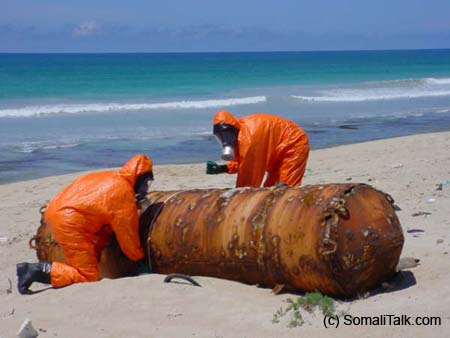
Social Stratification is described by Parrillo as the hierarchical classification of members of society based on the unequal distribution of resources, power and prestige. Social stratification can very well be the root for all the ongoing problems that developed into piracy. There is an unequal distribution of resources from Europe to Africa due to the fact that for the past three decades poor African nations have served as the dumping ground for hazardous waste material, raw sewage, sludge, incinerated ashes, contaminated oil, chemical substances, acids, poisonous solvents ejected by chemical, pharmaceutical and fertilizer producing plants in the industrialized world according to Greenpeace. Power has created a business of waste dumping is an uneven system; while African nations are in debt, they view accepting to have waste dumped in their countries as a big incentive, while first world nations make profits from this exploiting business. In the year 1992 Italy and Switzerland agreed to dump 500,000 ton of processed industrial waste per year at the incredible low price of $2.50 per ton. Would Italy or Switzerland have dumped their waste in their land, it would have cost them $3,000 per ton; you do the math, African waste dumping is profitable even at the cost of human lives in the businessmen perspective.

Part I: Background


. In 2008, the number of reported piracy attacks off East Africa rose astronomically. In the first quarter of 2008, there were 11 piracy attacks in that region, rising to 23 in the second quarter and rocketing to 50 in the third and 51 in the fourth quarters, making a total of 135 attacks during 2008 (" Piracy in waters off the coast of Somalia"). There is a variety of reasons to explain why some people in the country have turned to piracy; but mainly poverty and the lack of central government to enforce laws on both its citizens and foreigners that are disobeying the law. Due to illegal fishing practices that have depleted fisheries, many fishermen became unemployed and now they have found a source of income turning their seafaring skills into piracy. Also very importantly is the fact that Somalia, as many underdeveloped nations has become a ground for industrial waste dumping generated by Europe and the United States. All these factors have left many Somalis with very little options but to turn into piracy as a form of survival and violent revolt against inequality in their desperate world.


Poverty in Somalia has been a continuing issue, due partly to the legacy of colonization as poverty is an issue in many areas of the world. Somalia has had numerous difficulties in becoming a fully independent country. The nation receives continuous aid from international organizations as the UN, WHO, UNESCO, etc., yet the nation struggles to survive. In this chaotic economy, the overwhelming majority lives under scarcity; a third of population depends on food aid. The nation also has been set back politically; it has been without a central government since 1991. Also since the early nineties there has been an increase of illegal fishing by foreign companies especially for tuna. According to the article "The "other" pirates of the horn of Africa." 700 foreign-owned companies have fully engaged in unlicensed fishing thus leaving fishermen jobless. Even more distressful is the fact that because industrialized nations produce more waste than they can handle, and as they cannot dispose of them in their own boundaries due to rigorous environmental laws, popular awareness of the effects of toxic waste and therefore opposition and restrictions simply make it easier and far cheaper to dump the waste elsewhere; meaning frequently Africa and in this case Somalia.


Due to the lack of political stability, the pirates are adopting the role of the state creating order (Evans). Pirates become criminals because of desperation for a livelihood, money, and as a reaction for what many first-world nations have in many ways provoked in Somalia.

Sex Sells Extra Credit


We have all heard that “sex sells”, and today more than ever it seems that people are open to talk about sex and dress in a sexual manner in America and other parts of the world. It is almost hard to believe that in our grandparents times clothing composed of long skirts, blouses that revealed only the hands and today clothing has evolved to included miniskirts, and tops that reveal a lot more than hands, and this was all because the sexual revolution.
The sexual revolution started to develop over many years and the exact trigger that started it is unknown, however there are different social changes that help explain how it began. Many argue that is all started in the 60s when the social thought and behaviors related to sexuality began to change from conservative to more “free love” many of which are now integrated today into the mainstream. Hippies believed that we should make love, not war. While the extent to which the sexual revolution involved major changes in sexual behavior is debated, many observers suggest that the main change was not that people had more sex or different types of sex; it was simply that they talked about it more openly than previous generations had done. Also during the 60s women began to use the birth control pill, thus enabling people to engage in premarital sex. Clothing changed to be more revealing. Teen idols such as Jimi Hendrix, and Janis Joplin were drug consumers and more people began to experiment with drugs. Even a book helped in the changing of attitudes, Margaret Mead´s Coming of Age in Samoa brought the sexual revolution to the public scene, as she described the openness and unimportance of virginity in a different culture of Samoa.
Pornography became a form entertainment in magazines, such as the popular playboy and penthouse. Pornography also prevailed in movies such as the 1972s hit behind the green door, which started Marilyn Chambers the all American girl who happened to be a model for soaps with a baby by her side in ads, and also the first porn star.
You would imagine that up to this day prostitution would be legal and people’s morality would down to the grown, but this has not been the case. Since the AIDS epidemic in the 1980s people are more careful about sex and thus become less liberal perhaps that in the 1960s. Today teen idols, such as the Jonas Brothers, Miley Cyrus, and Taylor Swift among others openly talk about their virginity and plans on staying that way until marriage. At least that’s what they say; nevertheless it still sets a good example to young people. Today “Virginity Rings” are becoming very popular, they are rings people wear to show that they will not have sex until they get married.
With teen pregnancy and so many STDS, not only AIDS raising I think sexually has evolved very positively. From very conservative in my grandmothers time when people did not even talk about sex, to very openly in the 60s that it could lead to negative outcomes, to today when, in my critique, a lot of kids have sexual exposures in the media yet are choosing to stay away from sexual behaviors. And simply waiting for the appropriate time to do such an important thing as it is to have sex. Maybe after all sex does not sell it could be argued.


http://en.wikipedia.org/wiki/Sexual_revolution
http://en.wikipedia.org/wiki/Behind_the_Green_Door
http://www.vh1.com/

lunes, 19 de abril de 2010

Guidos and Guidettes


Just a few weeks ago I started watching a show on MTV called “The jersey shore” and I think it applies very well to popular culture. The show is about a group of people who move to the jersey shore over the summer to work and have fun and have their experiences filmed and then aired on television. It is a reality show and apparently all the housemates are of Italian American decent, I had no idea about this new form of stereotype called guidos for males and guidettes for females. During the first episode the cast member talk about guidos and guidettes, and I was curious to know what this was. A guido is a slang term for someone that is from a working class or lower class urban Italian American, in the show guidos are portrayed as having a tan, muscles, flashy clothes, listening to techno music, clubbing among other factors that make a guido. A guidette is someone that like the guidos takes care of themselves, dresses with heels, and has nice hair; sometimes they have puffy hair too. Apparently it is considered a complement to be called a guido or guidette.
The show has sparked some controversy because the influence the show has on the viewers. Based on the actions and behaviors of the cast members this creates possible manifest and or latent consequences. The cast members love to tan, some of them even own a tanning bed and this has been criticized for portraying tanning as a good habit, when in reality tanning is very bad for ones skin. One of the cast members called Snooki has a particular puffy hair style that apparently has been copied by girls all around; Snooki is even launching a “Snookit” with fake hair so people can easily get her hair look. The show is very open to sex and especially the guidos go out during the weekends to clubs to bring home a different girl every night. This has not created much controversy, but I think it comes to show that sex is normal in popular culture, when perhaps openness to sex should not be portrayed this way as it creates latent consequences; young people engaging in sexual behavior when they are not ready, infections and other negative factors. Another controversy of the show is the stereotype of Italian American young people. The cast members talk about guidos and guidettes all the time and they are in fact guidos and guidettes. Elder Italian Americans are not happy about this stereotyping, but the cast members claim that it is a positive stereotype. The show even stirred legal debates between MTV and the New Jersey Italian and Italian American Heritage Commission, MTV responded by saying “Jersey Shore is a reality series that follows eight young adults spending their summer at the beach. The show continues MTV's history of documenting various subcultures, rites of passage of young people, and the ways they self-identify. The Italian-American cast takes pride in their ethnicity. We understand that this show is not intended for every audience and depicts just one aspect of youth culture.”
Personally I really enjoy the show and watching other people’s way of life. This guidos and guidettes is all new to me, I knew about metro sexual people; people who take care of themselves but I did not know about the Italian heritage connection. I agree that being called a guido or guidette is probably a complement. The show is rather simple; all the cast memebers work on a T-shirt shop, but for being such a simple show I was shocked to see that the guidettes appeared on “Harpers Bazaar” one of my favorite magazines and the guidos had a photo shot with Bar Rafaeli, one of the top models of the world. I googled guidettes and so many pictures of girls that fit the stereotype came up; also on youtube there are even videos on how to become a guidette. This show is definitely part of popular culture, and it was neat to also learn a little from it.

Sources:
http://en.wikipedia.org/wiki/Jersey_Shore_%28TV_series%29
http://en.wikipedia.org/wiki/Guido_%28slang%29
http://www.hollyscoop.com/bar-refaeli/jersey-shore-guidos-pose-with-bar-rafaeli_23570.aspx#axzz0la31LHIj
http://www.youtube.com/watch?v=HAj_5UXs4z4&feature=related

lunes, 5 de abril de 2010

Native Americans

1. For this assignment I decided to focus on race. The first article is Culturally Appropriating Native Americans: A “Hands-on Approach to History”. The tile of the report by Gwen is disturbing because it denotes a racist approach to it by making native Americas become “appropriate”. The book is not a guide for Native Americans to preserve their culture, rather it is a book to guide white kids how to mimic and play natives.
The information in the book is vague regarding Native American culture and the purpose of describing different aspects such as tattooing, clothing, and hats are so that children create stereotypes about Native Americans and then copy the styles in this crafts book. A stereotype is an oversimplifies generalization by which we attribute certain traits or characteristics to a group without regard to individual difference, and this is exactly what this book aims to do. When a child sees a person with a bow and arrow, he or she will immediately believe this person is a Native American.
The author of the article states that “throughout the book, only the past tense is used, as though Native Americans are relics of the past, no longer in existence (or at least, no longer interesting).” Overall the book Romanticizes Native Americans as courageous, noble, but ultimately tragic figures of the past, this is the last stage of discrimination extermination. At least in this book extermination is seen by creating Native Americans “nonexistent” and figures of the past no longer alive. Examples of this discrimination are seen all around, for example when aboriginals put “stage shows” that tourist pay to go and watch, in Hawaii when people go to watch hula dancers, books that have a “how-to” do or play traditions of other cultures. Here is the link; http://contexts.org/socimages/2010/04/05/culturally-appropriating-native-americans-a-hands-on-approach-to-history/.
2. This article again is by Gwen it’s called IMAGES OF NATIVE AMERICANS. It points out that Indian names follow the pattern of ‘Present-Tense Singular Verb + with + Noun’” idea. Indian names are always funny and weird and show what the person does, or so do most people think. In addition, the article has a variety of different t-shirts people wear to Romanticizes Native American’s love for nature.
This article does not particularly show a pattern of discrimination but rather a pattern of prejudice, because it is an attitudinal system. In addition it is not negative but positive. From a cognitive level of prejudice it could be said that “native American are nature lovers and have funny names”.
Examples of this are abundant because it’s simple stereotyping, when people think that Chinese speak a certain way “me good”, “you like not” and so on, there is even a website to make your name Hawaiian http://hawaiiannames.hisurf.com/. Here is the link; http://contexts.org/socimages/2008/11/09/images-of-native-americans/
3. This article by Lisa “The Neutral And The Marked: A Primer For Your Kids”, it shows a variety of toys that are gear to make children be socially aware and expand their horizons. They have set of families of different races, for example the African American family has the mom and dad, two children, dog and basketball. The Asian family has mom, dad, two children and the dad is holding a camera. The Caucasian family has medical instruments as to show they have a good profession.
Overall the toys are not discriminatory, they could have been made even harsher assumptions on the races, but the problem comes with the instructions. The instructions say that “Children can imagine and tell stories about Red Indians, helping to stimulate their imagination and expanding their horizon.”, I feel there was no need to say “Red”, the article does not put the instructions about the other races, I wonder if they are too prejudice. The toys could lead children to develop socialization process, in which individuals acquire the values, attitudes, beliefs and perceptions of their cultures including religion, nationality, and social class based on these toys.
A clear example of this type of prejudice is experienced by many girls when they play with Barbie’s, as they often feel ugly and different because they don’t have blue eyes and blonde hair and although these toys are aiming at reducing segregation, perhaps they will have a positive outcome in future less discriminatory societies. Here is the link; http://contexts.org/socimages/2008/04/01/the-neutral-and-the-marked-a-primer-for-your-kids/

lunes, 1 de marzo de 2010

Global issue: Education around the world

A global issue that affects everyone is the fact that education is still not a reality in many areas of the world. Education is truly a privilege, and one that sadly many children lack of. Girls are specially the victims not being able to attend school. Often, it is boys who are given the chance to pursue education. In many cultures, young men are more likely to stay close to home, to bring a wife into the family, and to support their parents in their later years. Girls may marry out to become part of another family, and so educating them is seen as a poor investment, when in reality education for girls is necessary around the world.
Quality education for girls, who go on to be workers, mothers, and community leaders, is one of the best predictors of population stability, family well- being, and hope for the next generation. Nations with little access to education for women also tend to have exploding populations, high infant and maternal mortality rates, low levels of family well- being, and high rates of worker exploitation (Sernau). Societies with marked differences in educational access and quality also tend to be marked by poor growing social predictors. It is because of these reasons that education around the world is so important, and the fact that today many children do not have access to education only predicts a vulnerable future for such nations.
Around the world about two- thirds of all children never receive a high school education or its equivalent, (Sernau). Many cultures around the world instruct that men should go to school and learn as they will need education for math skills, reading and writing and women should not go to school because such skills are not needed to stay home. However in today’s growing globalization both girls and boys need educational skills. The World Bank often discourages what it sees as wasteful government spending, but encourages governments to spend on education (Sernau).
Lack of education is a global issue. In India most children receive some primary education, but classes are often very large. Many children, especially girls, have to work to help support their families. In some states of India, the female illiteracy rate is very high and in others the educational levels of girls and boys are much more equal. In places all across Asia education is seen as a strong investment and it has been key to rising standards of living of countries such as Japan and Singapore (Sernau). In Kenya, many of the girls are homeless, some have children of their own, many have been exploited by various employers and few have any other resources. Rather than keeping the girls in school, family members may try to pull them out, especially if their incomes are needed by the family. Given the examples India’s future would be one of prosperity in the south, but poverty in the north, in Asia given the actions taken by the government one would predict that Asia will continue to grow in the future. Unfortunately given the example that is not the case for Kenya.
Education is crucial for a better society. One aspect of interactionist theory states that better communication and intercultural awareness improve majority minority interaction patterns, and if more people become literate and educated, then better interaction could become an actuality.
Thankfully organizations are taken action in ending education poverty. The United Nations Children’s Fund (UNICEF 2005) has implemented several programs that share the goal of eliminating gender disparity in education. One program, called the 25 by 2005 Initiative, focuses on improving educational opportunities for girls in twenty- five of the countries judged to be most at risk of failing to achieve this goal, including eight West African countries. Also the United Nations has set a date for the millennium goals in hopes of ensuring that, by 2015, children everywhere, boys and girls alike, will be able to complete a full course of primary schooling. Hopefully with globalization growing consensus of the importance in education, more nations will invest in this human right and less social gaps will be created for a better world.


Sources:
Parrillo, Vincent N. (2008). Understanding Race and Ethnic Relations. Boston: Pearson
Scott Sernau. (2009). Global Problems: The Search for Equity, Peace, and Sustainability, Second Edition. Boston: Pearson.
The United Nations. http://www.un.org/millenniumgoals/education.shtml