viernes, 14 de mayo de 2010

Part III: Final sociological analysis and recommendations


Piracy affects all countries involved in international trade, and therefore all the consumers that purchase products from international trade. On 22 April 2008, France, the United Kingdom, and the United States called for a United Nations resolution to support the nations determined to fight piracy off Somalia (Weir). All nations most gather together to avoid other nations to be in such a distressed situation as to push them to commit a crime. Poverty and a lack of government are clearly two of the most influential factors that fueled the pirates to behave the way they do. Fighting poverty and chaotic governmental institutions benefits everyone and could be a key in ending piracy. Naval vessels from the United States, a number or European states, Russia, India, Canada, Turkey, Malaysia, and South Korea have been rushed to the scene and initiated anti piracy patrols. China has also now reportedly sent a naval detachment to the region. The United Nations Security Council passed resolutions stating all necessary means, including force, to repress piracy (Schofield).

Piracy will not stop waste dumping, the monetarily profits of piracy are not used to feed the poor but rather as an investment to further vandalized the seas of the world. Pirates spend their millions of dollars from ransoms to buy more weapons, more boats, not to feed the poor. It is because this incontinent truth that there are no villains or heroes in the war of piracy. Piracy affects all of us; it affects our environment, our security, and stability that we all should be conserved about as global citizens.

Both piracies as well as illegal waste dumping desperately need a solution. Some argue that the only way to combat piracy is to start the battle on land, in war-torn Somalia ("EU begins anti-piracy mission"). Hope in globalization and the increasing economic interconnection of countries would make interconnectedness another powerful tool in ending piracy. We often seem to forget about problems in the world, especially in Africa because they seem too distant for us to even consider them, when in reality we all live in one world, one planet that has one environment. Whether waste is dumped in Somalia or in Hawaii it is still being improperly disposed. As consumers we contribute to this waste and therefore should at least be informed how it creates a chain of issues. The situation of piracy on Somalia is just another example of the importance of peace, security and stability in our ever growing interconnected global world.


Sources:


Abdullahi, Najad. 'Toxic waste' behind Somali piracy . Al Jazeera, October 11, 2008. Web. 10 May 2010. http://english.aljazeera.net/news/africa/2008/10/2008109174223218644.html

EU begins anti-piracy mission. Al Jazeera, December 08, 2008. Web. 10 May 2010. http://english.aljazeera.net/news/europe/2008/12/200812843349810691.html

Evans, Michael. Royal Navy in firefight with Somali pirates. TimesOnline, November 12, 2008 . Web. 10 May 2010.

Kimuna, Sitawa. "Hazardous Waste Transfer to Africa: implications for the poor and marginalized.." Sustainable Communities 2004. 7.1 (2004): 48.53. Print.

Parrillo, Vincent. Understanding Race and Ethnic Relations . Third. Pearson, 2008. pg. Print. Piracy in waters off the coast of Somalia. International Maritime Organization, 2002. Web. 10 May 2010.

"Pirates 'gained $150m this year' ." BBC, 21 November 2008. Web. 10 May 2010. .

Starr, Barbara. U.S. destroyer pursuing hijacked ship in Somali waters, military says. CNN, 10, 10, 2007. Web. 10 May 2010. .

Schofield, Clive. "The "other" pirates of the horn of Africa." (2009): 1-4. Print.

Somalia country profile . BBC, 28 April 2010. Web. 8 May 2010. .

Somali piracy . BBC, 2 November 2009. Web. 7 May 2010. .

.

"Somali Fishing Industry Has Potential for Growth." Foreign Fishery Developments. (1992): 1-28. Print.

Weir, Gary. "FISH, FAMILY, AND PROFIT." Piracy and the Horn of Africa. (2006): 1-16. Print.

Part II: Major contemporary concerns and sociological analyses


One of the ways to describe the problems in Somalia is that of the so called hate crimes. According to Parrillo hate crimes are defined as any criminal offense against a person or property that is motivated in whole or part by the preferences bias against, race, religion, ethnic national origin, group or sexual orientation. These hate crimes occur at two different levels, hate crimes that the Somalis pirates commit by hijacking people on boats and holding them hostage until a ransom is paid. From 1993 to 2005, 340 crew members and passengers died at the hands of pirates, and 464 received injuries. In 2005 alone piracy resulted in over 150 injuries and assaults and over 650 crew members were taken hostage or kidnapped (Weir). Crew members and outsiders from Somalia have died due to piracy hate crimes, but hate crimes is another way to describe what developed nations are committing in Somalia. It is a criminal offense against property to dump toxic waste without the proper precautions in the area; many Somalis have also died due to the toxic waste dumping. From a sociological perspective frustration, stereotyping, occupation mobility and social stratification are all key terms in describing the issue of piracy in Somalia.


Desperate situations call for desperate measures and some of the pirates are acting upon desperate grounds of poverty, Parrillo points out that frustration is the result of relative deprivation in which expectations remain unsatisfied. Relative deprivation is a lack of resources, or rewards, in ones standard of living in comparison with those of others in the society. Frustration can increase aggression towards others. The majority of the Somalis population lives under poverty as previously described. Pirates feel frustrated by not being able to make money and they turn to crimes as a way to ease their frustration. According to BBC the rewards pirates receive from ransoms are rich in a country where there are no jobs and over a third of the population needs food aid. Somalia’s internal unrest, its lack of government control, and the authority of local clan warlords have created a favorable climate for maritime crime, one that often gives thieves and pirates permission to act freely (Weir, 1-16).


We develop stereotypes over many factors of society. A Stereotype is an oversimplified generalization by which we attribute certain traits or characteristic to a group without regard to individual differences (Parrillo 89). Few people have been to Somalia, and now even less individuals are willing to go there; therefore much of the information gather from this side of the world is done by television. Abundant research evidence indicates television programming distorts reality, promotes stereotypical role models, and significantly shapes our attitudes towards society (Parrillo 89). The European media such as the BBC describe the pirates as technological advanced criminals. Somali pirates have satellites and GPS, they are heavily armed with grenades and AK-47s, and they have access to speedboats, and take people hostage ashore until a ransom is paid. All these factors depicting the pirate’s actions are very much true, but what the industrialized media usually does not demonstrate is the equally importantly hidden motifs for why the pirates do as they do in the Somalia territory.


Occupation mobility is the ability of individuals to improve their job position (Parrillo 68). Loss of status and prestige increases hostility towards out groups and this is precisely what occurred to many Somalis fishermen. Pirates for the most part used to be fishermen and because of the illegal fishing in the area have been left out of business. Business that has proven to be profitable for the intruders; earning an approximate of US$90 million-US$300 million per year, while the fishermen turn to piracy to earn a living (Schofield 1-4).


Social Stratification is described by Parrillo as the hierarchical classification of members of society based on the unequal distribution of resources, power and prestige. Social stratification can very well be the root for all the ongoing problems that developed into piracy. There is an unequal distribution of resources from Europe to Africa due to the fact that for the past three decades poor African nations have served as the dumping ground for hazardous waste material, raw sewage, sludge, incinerated ashes, contaminated oil, chemical substances, acids, poisonous solvents ejected by chemical, pharmaceutical and fertilizer producing plants in the industrialized world according to Greenpeace. Power has created a business of waste dumping is an uneven system; while African nations are in debt, they view accepting to have waste dumped in their countries as a big incentive, while first world nations make profits from this exploiting business. In the year 1992 Italy and Switzerland agreed to dump 500,000 ton of processed industrial waste per year at the incredible low price of $2.50 per ton. Would Italy or Switzerland have dumped their waste in their land, it would have cost them $3,000 per ton; you do the math, African waste dumping is profitable even at the cost of human lives in the businessmen perspective.

Part I: Background


. In 2008, the number of reported piracy attacks off East Africa rose astronomically. In the first quarter of 2008, there were 11 piracy attacks in that region, rising to 23 in the second quarter and rocketing to 50 in the third and 51 in the fourth quarters, making a total of 135 attacks during 2008 (" Piracy in waters off the coast of Somalia"). There is a variety of reasons to explain why some people in the country have turned to piracy; but mainly poverty and the lack of central government to enforce laws on both its citizens and foreigners that are disobeying the law. Due to illegal fishing practices that have depleted fisheries, many fishermen became unemployed and now they have found a source of income turning their seafaring skills into piracy. Also very importantly is the fact that Somalia, as many underdeveloped nations has become a ground for industrial waste dumping generated by Europe and the United States. All these factors have left many Somalis with very little options but to turn into piracy as a form of survival and violent revolt against inequality in their desperate world.


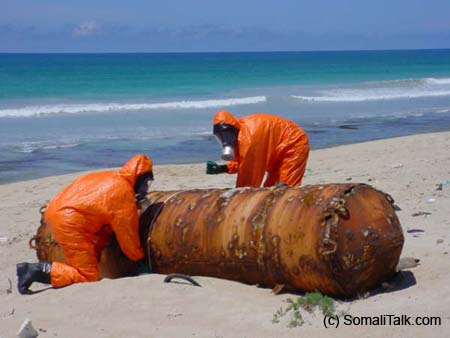
Poverty in Somalia has been a continuing issue, due partly to the legacy of colonization as poverty is an issue in many areas of the world. Somalia has had numerous difficulties in becoming a fully independent country. The nation receives continuous aid from international organizations as the UN, WHO, UNESCO, etc., yet the nation struggles to survive. In this chaotic economy, the overwhelming majority lives under scarcity; a third of population depends on food aid. The nation also has been set back politically; it has been without a central government since 1991. Also since the early nineties there has been an increase of illegal fishing by foreign companies especially for tuna. According to the article "The "other" pirates of the horn of Africa." 700 foreign-owned companies have fully engaged in unlicensed fishing thus leaving fishermen jobless. Even more distressful is the fact that because industrialized nations produce more waste than they can handle, and as they cannot dispose of them in their own boundaries due to rigorous environmental laws, popular awareness of the effects of toxic waste and therefore opposition and restrictions simply make it easier and far cheaper to dump the waste elsewhere; meaning frequently Africa and in this case Somalia.


Due to the lack of political stability, the pirates are adopting the role of the state creating order (Evans). Pirates become criminals because of desperation for a livelihood, money, and as a reaction for what many first-world nations have in many ways provoked in Somalia.

Sex Sells Extra Credit


We have all heard that “sex sells”, and today more than ever it seems that people are open to talk about sex and dress in a sexual manner in America and other parts of the world. It is almost hard to believe that in our grandparents times clothing composed of long skirts, blouses that revealed only the hands and today clothing has evolved to included miniskirts, and tops that reveal a lot more than hands, and this was all because the sexual revolution.
The sexual revolution started to develop over many years and the exact trigger that started it is unknown, however there are different social changes that help explain how it began. Many argue that is all started in the 60s when the social thought and behaviors related to sexuality began to change from conservative to more “free love” many of which are now integrated today into the mainstream. Hippies believed that we should make love, not war. While the extent to which the sexual revolution involved major changes in sexual behavior is debated, many observers suggest that the main change was not that people had more sex or different types of sex; it was simply that they talked about it more openly than previous generations had done. Also during the 60s women began to use the birth control pill, thus enabling people to engage in premarital sex. Clothing changed to be more revealing. Teen idols such as Jimi Hendrix, and Janis Joplin were drug consumers and more people began to experiment with drugs. Even a book helped in the changing of attitudes, Margaret Mead´s Coming of Age in Samoa brought the sexual revolution to the public scene, as she described the openness and unimportance of virginity in a different culture of Samoa.
Pornography became a form entertainment in magazines, such as the popular playboy and penthouse. Pornography also prevailed in movies such as the 1972s hit behind the green door, which started Marilyn Chambers the all American girl who happened to be a model for soaps with a baby by her side in ads, and also the first porn star.
You would imagine that up to this day prostitution would be legal and people’s morality would down to the grown, but this has not been the case. Since the AIDS epidemic in the 1980s people are more careful about sex and thus become less liberal perhaps that in the 1960s. Today teen idols, such as the Jonas Brothers, Miley Cyrus, and Taylor Swift among others openly talk about their virginity and plans on staying that way until marriage. At least that’s what they say; nevertheless it still sets a good example to young people. Today “Virginity Rings” are becoming very popular, they are rings people wear to show that they will not have sex until they get married.
With teen pregnancy and so many STDS, not only AIDS raising I think sexually has evolved very positively. From very conservative in my grandmothers time when people did not even talk about sex, to very openly in the 60s that it could lead to negative outcomes, to today when, in my critique, a lot of kids have sexual exposures in the media yet are choosing to stay away from sexual behaviors. And simply waiting for the appropriate time to do such an important thing as it is to have sex. Maybe after all sex does not sell it could be argued.


http://en.wikipedia.org/wiki/Sexual_revolution
http://en.wikipedia.org/wiki/Behind_the_Green_Door
http://www.vh1.com/